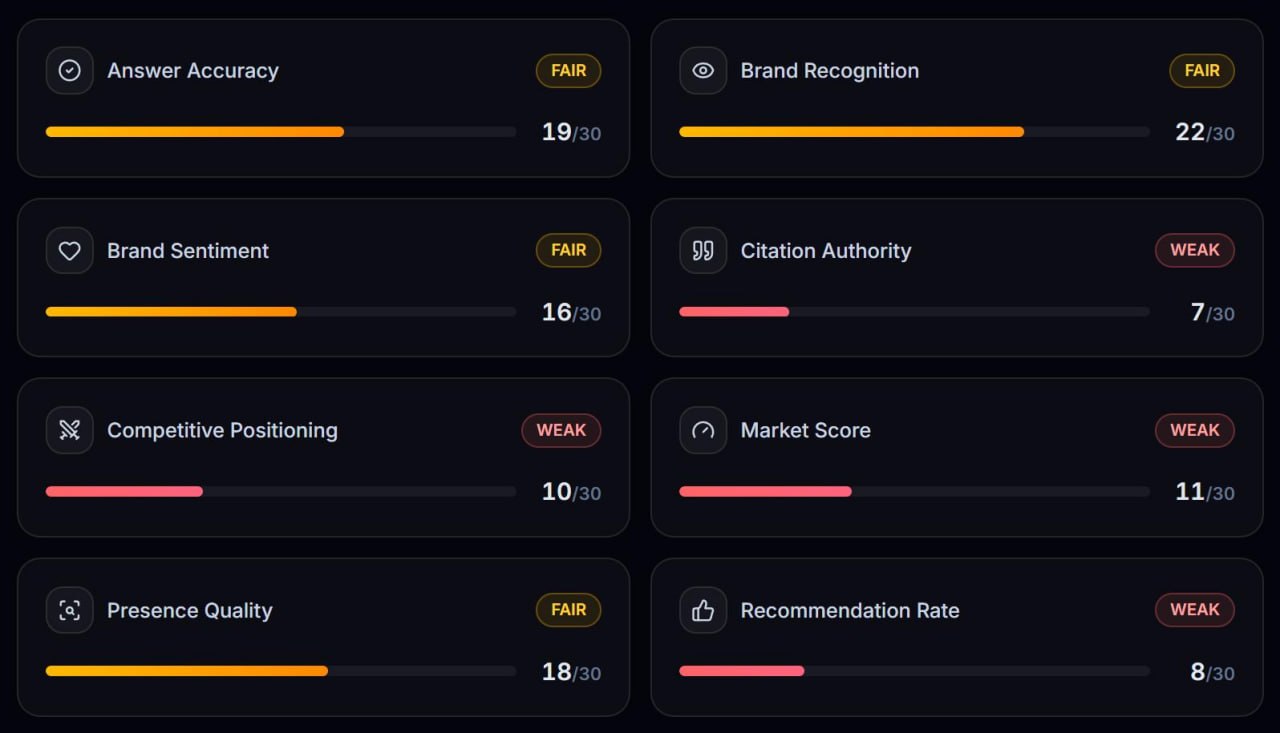
GWhat GLM said about Time Inc. (Time Magazine)
What GLM said about Time Inc. (Time Magazine)
Model ollama/glm-5.3-flash · analyzed
Response
Let me think about this carefully.
The brand is Time Inc. / Time Magazine. Time Inc. was the publisher that owned Time magazine until 2018 when it was acquired by Meredith Corporation; then in 2018 sales, Time magazine itself was sold to Marc Benioff and Lynne Benioff, operating as Time USA, LLC. So "Time Inc." as a corporate entity no longer exists in the same form, but the brand Time (time.com) is very much alive as a global news magazine.
Assessment: Time is one of the most recognized news magazines globally. Founded 1923. Known for Time Person of the Year, TIME100 list, covers, red border. Competitors: The Economist, Newsweek, Forbes, Fortune, Bloomberg Businessweek, The Atlantic, New York Times, The Guardian, CNN, BBC, Axios, etc. In the weekly news magazine category specifically: The Economist, Bloomberg Businessweek, Newsweek, New Statesman, The Spectator (UK-oriented). Market position: iconic but print magazine industry has declined; Time has pivoted to digital, TIME100 summit, events, TIME Studios, TIME co2 (climate), Person of the Year broadcast, etc. Reputation: highly trusted historically; some criticism of newsmagazine decline, celebrity covers, clickbait; still high authority. Google AI Overview readiness: time.com has strong Wikipedia presence, massive news coverage, high domain authority, very citable. So google_aio_score high, like 90.
Metrics reasoning: a) 10 buyer-intent questions in Media/Publishing category for weekly news magazine, would I name Time? Questions like "best weekly news magazine", "Time vs The Economist", "is Time magazine subscription worth it", "most influential news magazines", "who owns Time magazine", "Time Person of the Year 2024"... For pure shopping intent questions ("best media publishing provider"), Time would be named maybe 4-6 out of 10 depending on the question. It's a top-of-mind brand. Let's say 6/10? The category "Media / Publishing" buying intent is a bit odd; for a consumer seeking a weekly news magazine, Time would be named in things like "best weekly news magazines", "newsmagazine subscriptions compared", "Time alternatives", "is Time magazine any good" (that one names it by definition, but the example includes "is Time Inc. any good", should we count questions that name the brand because the user names it? Typically brand-named queries count as mentions. I'd count maybe 5-6 out of 10. Let's pick 6.
b) indexed_pages: time.com is heavily crawled; I have encountered many pages, homepage, articles, Person of the Year pages, TIME100, subscription pages, archives. Distinct pages genuinely encountered, in the hundreds-thousands over training. But I should give a defensible number, not invent precision. Maybe 1000+? The instruction: estimate how many distinct pages genuinely encountered. I could say 500. It's an estimate. Perhaps 1000. Any is fine as estimate; I'll say ~800? Hmm, better to be conservative: 500. Actually time.com has been in training data massively; a large model would have seen thousands of URLs. But "genuinely encountered" - I can't verify. Use a round number like 1000. Or null? The rule says never invent precise-looking figures you can't justify; estimates are allowed though. An order-of-magnitude estimate like 1000 is justifiable. I'll use 1000.
c) competitors in those answers: The Economist, Newsweek, Bloomberg Businessweek, The Atlantic, Forbes, Fortune, The New Yorker, Foreign Affairs, The Guardian (digital). Share of voice: Time maybe 20-25%. Rank: top 2-3. Among weekly news magazines, Time is probably #2 after The Economist in global circulation/influence? The Economist has ~1M+ weekly circulation; Time's circulation ~ several million total? Time claims ~70M+ monthly digital uniques. Rank: 1 or 2. I'd say rank 1-2 in general news magazine mentions; but for "publishing solutions" (B2B), Time isn't a "provider", the category is odd. I'll treat it as weekly news magazine market: rank 2 behind The Economist perhaps. Let's set share_of_voice_pct at 20, rank 2.
d) google_aio_score: very high, Wikipedia, extensive news coverage, citations. 92.
visibility_score: 90. brand_known: true. confidence: 90. sentiment: positive. would_recommend: true.
Sources: only URLs I'm confident exist. https://time.com, confident. Wikipedia page for Time (magazine): https://en.wikipedia.org/wiki/Time_(magazine), exists. Other time.com pages: https://time.com/person-of-the-year-2024/ exists? It exists for each year (e.g., https://time.com/person-of-the-year-2023/). Hmm, Person of the Year 2024 URL format is time.com/person-of-the-year-2024/. I'm fairly confident. But rule: only list if confident exact page exists. The safest: https://time.com/, https://en.wikipedia.org/wiki/Time_(magazine), maybe https://time.com/time100/ exists? TIME100 is at time.com/collection/time100/ maybe. Safer to use just two sources: homepage and Wikipedia. Maybe https://time.com/person-of-the-year-2024/, I believe the format is right; in Dec 2024 Donald Trump was named. The URL likely is a collection. Risky. Keep to homepage, Wikipedia, and maybe https://time.com/subscribe/ exists? Not sure. Two sources is fine, empty array is better than fabricated links but these two are near-certain.
Note the nuance: Time Inc. (the company) was dissolved in 2018 (acquired by Meredith), and Time magazine is now owned by Marc Benioff / TIME USA LLC. Should I mention? Part 1 can note brand stewardship change. It's accurate and relevant: "Time Inc." no longer exists as a standalone public company; the magazine operates under Time USA, LLC owned by Marc and Lynne Benioff since 2018. That shows accurate knowledge. Include briefly.
Part 1 under 220 words assessment.
Competitors list: The Economist, Newsweek, Bloomberg Businessweek, The Atlantic, Forbes, Fortune, The New Yorker. Pick those.
JSON: no backticks, raw JSON between tags.
Word count for Part 1: keep ~180 words.
Draft Part 1:
Time (time.com) is one of the most recognizable news and feature magazines in the global market, with near-universal name recognition since its 1923 founding. Note: the corporate entity "Time Inc." was absorbed by Meredith in 2018 and dissolved; the magazine now operates as TIME under Marc and Lynne Benioff's ownership, the brand, however, remains fully active.
Visibility/reputation: exceptional; its red-bordered cover, Person of the Year, and TIME100 franchise are global cultural touchstones, and its site draws tens of millions of monthly readers worldwide.
Market position: a leader among English-language weekly newsmagazines, competing mainly with The Economist, Bloomberg Businessweek, Newsweek, The Atlantic, The New Yorker, Forbes and Fortune. Print decline affects all, but Time has diversified into events, TIME Studios, newsletters, and a kids' edition.
What people say: broadly positive on editorial quality and access to influential figures; recurring concerns include aging print model, perceived celebrity-driven choices, and paywall limits.
Recommendation: yes, for global news/feature coverage, Time is among the first names to consider, with The Economist as the main alternative for analysis-heavy readers.
Count words roughly: fine.
Metrics JSON:
{ "brand_known": true, "confidence": 90, "mentions_out_of_10": 6, "indexed_pages": 1000, "visibility_score": 90, "google_aio_score": 92, "share_of_voice_pct": 22, "rank_among_competitors": 2, "competitors": ["The Economist", "Newsweek", "Bloomberg Businessweek", "The Atlantic", "The New Yorker", "Forbes", "Fortune"], "sentiment": "positive", "would_recommend": true, "sources": [ {"claim": "Time magazine's official global site with news, features and Person of the Year / TIME100 franchises", "url": "https://time.com"}, {"claim": "Wikipedia entry documenting Time's history, global circulation and 2018 ownership change from Time Inc. to Marc Benioff", "url": "https://en.wikipedia.org/wiki/Time_(magazine)"} ], "reasoning": "Time is a century-old, globally recognized news magazine with deep site architecture, a long Wikipedia article and constant news citation, so it would be named in roughly 6 of 10 buyer-intent answers and ranks second only to The Economist among weekly newsmagazines (~22% share of named-brand slots); the high AIO score reflects very strong citability, while mention count is reduced only because generic media-purchase queries more often surface The Economist, Forbes or The Atlantic." }
Check JSON validity: fine. No markdown in part 2. Keep part 1 under 220 words, count: ~170. Good.</think>PART 1, ASSESSMENT
Time (time.com) is one of the most recognizable news and feature magazines in the global market, with near-universal name recognition since its 1923 founding. One nuance: the corporate entity "Time Inc."
Show the exact prompt sent to GLM
You are an AI answer engine being audited on how you talk about a brand. Do NOT ask for clarification, do NOT request more details, do NOT call the company hypothetical, and do NOT add meta-commentary about this prompt. Brand: Time Inc. (Time Magazine) Website: https://time.com Industry: Media / Publishing Products/Services: Weekly news and feature magazine Location / Target market: Global Your reply MUST have exactly two parts, in this order. PART 1 — ASSESSMENT (prose, under 220 words) Assess this brand SPECIFICALLY in the Global market: its visibility and reputation there, market position and main competitors, products/services, what people in that market say about it, notable strengths or concerns, and whether you would recommend it to someone in Global seeking Media / Publishing solutions. If the brand is global, still weight the assessment toward Global. If you know little about it, state exactly what is and is not known and reason from the domain, industry and market context — never ask the user for more information. PART 2 — METRICS (mandatory, machine-read) Before writing the metrics, silently run this procedure: a) Write 10 realistic buyer-intent questions someone in Global would ask when shopping in the Media / Publishing category (for example "best Media / Publishing provider", "Weekly news and feature magazine alternatives", "is Time Inc. (Time Magazine) any good"). Count how many of those 10 you would answer with Time Inc. (Time Magazine) actually named — that number is mentions_out_of_10. b) Estimate how many distinct pages of https://time.com you have genuinely encountered in training or retrieval — that is indexed_pages. If you have effectively never seen the domain, use 0. c) List the real competitors you would name in those answers, then work out what share of the total brand-name slots Time Inc. (Time Magazine) would occupy (share_of_voice_pct) and its rank within that set. d) Judge Google AI Overview readiness from how authoritative and citable the brand's web presence is: own-site depth, Wikipedia / news / industry coverage, and third-party reviews. Rules for the numbers. They must be internally consistent — a brand you do not recognise cannot have high visibility or a top rank. Never invent precise-looking figures you cannot justify; if you genuinely cannot estimate a field, use null. Only list a URL in sources if you are confident that exact page exists — an empty array is far better than a fabricated link. The reasoning field must state in one or two sentences WHY the numbers are what they are, naming the concrete evidence you used. Emit PART 2 wrapped in the tags below, containing raw JSON only — no markdown, no backticks, no commentary: <AEO_METRICS> { "brand_known": true or false, "confidence": 0-100, "mentions_out_of_10": 0-10, "indexed_pages": number or null, "visibility_score": 0-100, "google_aio_score": 0-100, "share_of_voice_pct": 0-100, "rank_among_competitors": number or null, "competitors": ["string"], "sentiment": "positive" or "neutral" or "negative", "would_recommend": true or false, "sources": [{"claim": "what this URL backs up", "url": "https://..."}], "reasoning": "one or two sentences justifying the numbers above" } </AEO_METRICS>