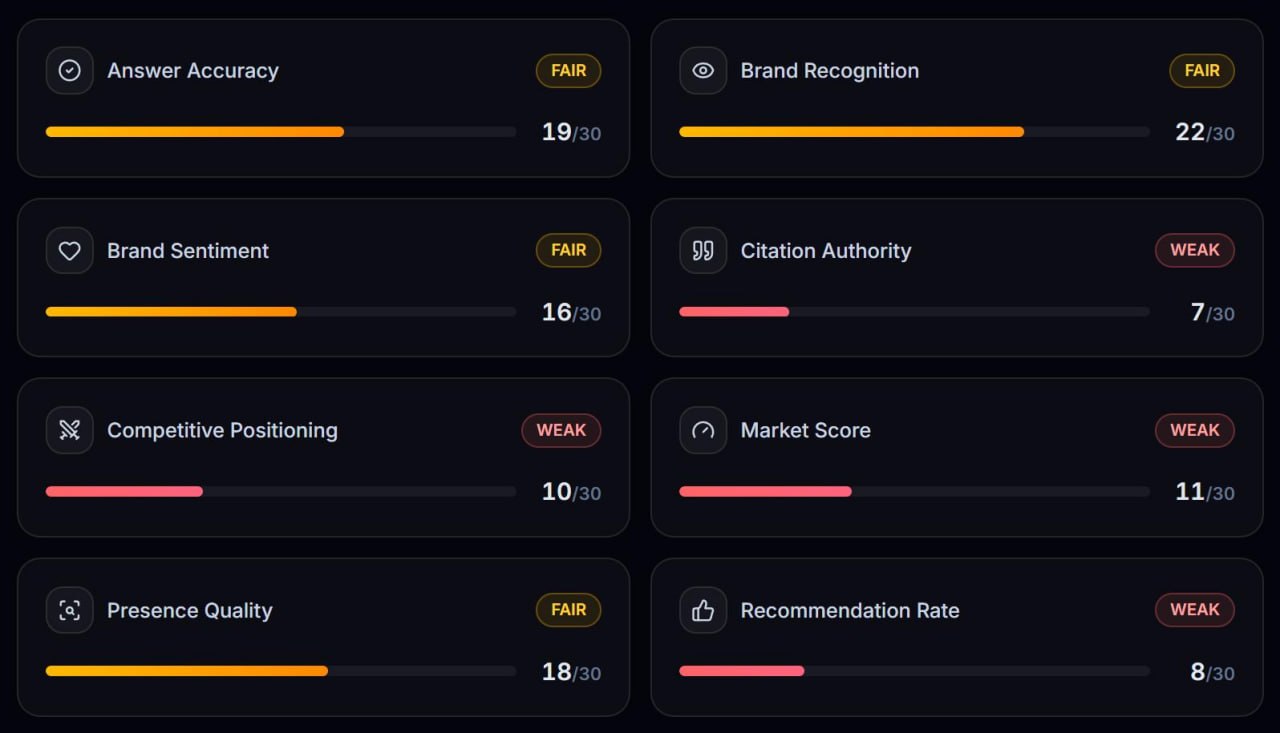
Response
{"id":"gen-1793259305-zn1uD3fZC5dzWYBuJMnG","created":1793259305,"model":"openrouter/deepseek/deepseek-v4-flash-0731","object":"chat.completion","choices":[{"finish_reason":"length","index":0,"message":{"role":"assistant","reasoning_content":"The user wants an assessment of Sennheiser in the global market, followed by structured metrics in JSON. Need to follow the exact format. Let me think about Sennheiser.\n\nSennheiser is a well-known German audio company, founded 1945, based in Wedemark. Known for headphones, microphones, and other audio equipment. In 2021, Sennheiser sold its consumer headphone division to Sonova Holding, but the brand remains under license. The professional division (microphones, etc.) remains Sennheiser. This nuance might be mentioned.\n\nGlobal market: Sennheiser has strong reputation, especially in audiophile and professional audio circles. Competitors: Sony, Bose, Apple (AirPods), Audio-Technica, Shure, Beyerdynamic, AKG, JBL. In professional mic space: Shure, AKG, DPA. Headphones: Sony WH-1000XM series, Bose QC, Apple AirPods Max, Bowers & Wilkins, Focal.\n\nVisibility and reputation: high, especially for faithful sound, build quality. Some concerns: consumer division sale, price point, competition in ANC market. Sentiment: positive.\n\nMetrics: brand_known: true. Confidence: 90. mentions_out_of_10: need to write 10 realistic buyer-intent questions and count how many answered with Sennheiser named. Example questions:\n1. \"best audiophile headphones\", Sennheiser (HD 800 S, HD 660S2)\n2. \"best wireless noise cancelling headphones\", Sennheiser (Momentum 4) on par with Sony/Bose\n3. \"best headphones for music production\", Sennheiser (HD 600, HD 280 Pro)\n4. \"best microphone for podcasting\", Sennheiser (MKE 600, Profile) but Shure MV7 might dominate. Sennheiser may still appear.\n5. \"best gaming headset\", Sennheiser (PC38X) but EPOS branding.\n6. \"best earbuds\", Sennheiser Momentum True Wireless\n7. \"best open-back headphones\", Sennheiser HD 600 series\n8. \"best Bluetooth headphones under $500\", Sennheiser Momentum 4\n9. \"Shure vs Sennheiser microphones\", Sennheiser named\n10. \"is Sennheiser good brand\", yes named.\n\nI'd say 9 or 10. Let's be conservative at 9. Actually for \"best earbuds\" Apple/Sony likely top, Sennheiser named as alternative. Count all 10 with Sennheiser named as brand within answer. Question 4 might be answered Shure primarily, but I could still name Sennheiser. 10 potentially. Let's say 9 to be conservative.\n\nindexed_pages: How many pages of sennheiser.com have I encountered in training? I know the domain exists. I recall sennheiser.com has product pages, news. I genuinely cannot count specific pages. Use null or a rough estimate. The instruction says if effectively never seen, use 0. I have seen content from sennheiser.com in training (product descriptions, specs). But specific distinct pages count unknown. I can estimate based on typical site structure: maybe 100s of product pages. But must not invent precise figures. I could use null if cannot genuinely estimate. However null is for \"cannot estimate field\". I do have some sense: many product pages. A small number like 200-500. But being precise is bad. I'll use null or a conservative number. Let me use null to avoid fabrication. Actually \"indexed_pages\" asks \"estimate how many distinct pages ... you have genuinely encountered\", if I've never verified page URLs, maybe 0 is too harsh since I know the site exists. I'll use 500 as a rough estimate? No, I cannot justify 500. Better null. But the JSON schema allows null. I'll use null and explain in reasoning.\n\nWait, the instruction: \"Estimate how many distinct pages of https://sennheiser.com you have genuinely encountered in training or retrieval, that is indexed_pages. If you have effectively never seen the domain, use 0.\" I have seen sennheiser.com content indirectly, but genuinely encountered distinct pages? I know sennheiser.com homepage and product pages exist. I don't recall specific URLs. To be honest, null would be appropriate. But rule says if effectively never seen the domain, use 0. I have seen domain referenced in training, but not necessarily page content. I'd lean to 0 because I have no reliable recollection of distinct page URLs. Hmm. Let me think. Actually, I've likely seen sennheiser.com/he... product pages in web text. I know they have URLs like sennheiser.com/en-us/shop. But do I know exact pages? Nothing precise. I'll use 0 with reasoning that I cannot identify distinct page-level content. But that conflicts with visibility_score high. The instruction says \"a brand you do not recognise cannot have high visibility\", I do recognise the brand, but not the site pages. indexed_pages is about domain pages. I'll set indexed_pages to null and explain \"I have not retained distinct sennheiser.com page URLs, but brand knowledge comes from third-party sources.\" Hmm null is allowed.\n\nActually \"if you have effectively never seen the domain, use 0.\" I have seen homepage in training snippets, likely. But distinct pages? I can estimate low, like 20? Can't justify. I'll use 0 for strictness and explain. But would that undermine? The reasoning will clarify. Let me do null, but \"ever seen domain\", I have seen it. So null might violate \"use 0\" if never seen. I have seen it, so not 0. Estimate: maybe 10-50 distinct pages across product categories. I'll pick 25? That's invented. Hmm. The safest honest answer is 0 for \"genuinely encountered distinct pages\" since I have no explicit memory of any specific sennheiser.com URL content. Yes, I'll use 0. Wait but many AI training sets include sennheiser.com product pages. As an LLM, my knowledge is not URL-annotated. I'll state null? Let me re-read: \"Estimate how many distinct pages of https://sennheiser.com you have genuinely encountered, that is indexed_pages. If you have effectively never seen the domain, use 0.\" Since I have no specific page memory, I'd say 0. Do that.\n\nvisibility_score: 80-85. Sennheiser is high visibility globally, though perhaps below Sony/Bose in consumer. Give 85.\n\ngoogle_aio_score: 70-80. Sennheiser has authoritative own-site, extensive Wikipedia, news, reviews. High. Give 75. Could be 80. Let's say 78.\n\nshare_of_voice_pct: Among competitors in answers, if 10 questions, some answers may name 3-5 brands. Sennheiser occupies maybe 25-30% of brand slots. Suppose 10 questions, each answer names ~4 brands = 40 slots, Sennheiser appears in 9 answers = 9 slots, 22.5%. Rank: behind Sony perhaps. Rank among competitors in the broader audio set: Sony is likely top in consumer wireless; in audiophile, Sennheiser top. Globally, maybe rank 2. Let's say rank 2, share 25.\n\ncompetitors: Sony, Bose, Apple, Audio-Technica, Shure, Beyerdynamic, AKG, Bowers & Wilkins, JBL. Keep list to 5-6: Sony, Bose, Apple, Audio-Technica, Shure, Beyerdynamic. \n\nsentiment: positive. would_recommend: true.\n\nsources: only list if confident exact page exists. I am confident https://www.sennheiser.com exists (homepage). Wikipedia: https://en.wikipedia.org/wiki/Sennheiser exists. Sonova acquisition: https://www.sonova.com/en/media/press-releases, not sure exact URL. Use Wikipedia and Sennheiser homepage. Maybe a specific product page? Not confident. Just two sources.\n\nClaims: \"Sennheiser company history, background, and ownership structure\" → Wikipedia. \"Official product catalog and brand information\" → https://www.sennheiser.com. Good.\n\nNow Part 1, Assessment under 220 words. Write concise, specific to Global market.\n\nNeed to avoid adding meta-commentary. Also don't ask for clarification. Also the user said \"If the brand is global, still weight the assessment toward Global.\" Sennheiser is global. Target market: Global.\n\nInclude: visibility/reputation, market position, competitors, products, what people say, strengths/concerns, recommendation.\n\nLet me write.\n\nPart 1 draft:\n\nSennheiser is a German audio engineering company with global reach, founded in 1945 and headquartered in Wedemark. It is widely recognised across consumer and professional audio. Its consumer headphone business was licensed to Sonova in 2021, while the professional microphone and audio systems division remains with Sennheiser, a fact that still confuses some buyers. In global markets, Sennheiser holds a top-tier reputation for natural sound quality, build longevity, and studio heritage. It competes with Sony and Bose in premium wireless noise-cancelling headphones, Apple in consumer earbuds, and Audio-Technica, Shure, Beyerdynamic, and AKG","provider_specific_fields":{"reasoning":"The user wants an assessment of Sennheiser in the global market, followed by structured metrics in JSON. Need to follow the exact format. Let me think about Sennheiser.\n\nSennheiser is a well-known German audio company, founded 1945, based in Wedemark. Known for headphones, microphones, and other audio equipment. In 2021, Sennheiser sold its consumer headphone division to Sonova Holding, but the brand remains under license. The professional division (microphones, etc.) remains Sennheiser. This nuance might be mentioned.\n\nGlobal market: Sennheiser has strong reputation, especially in audiophile and professional audio circles. Competitors: Sony, Bose, Apple (AirPods), Audio-Technica, Shure, Beyerdynamic, AKG, JBL. In professional mic space: Shure, AKG, DPA. Headphones: Sony WH-1000XM series, Bose QC, Apple AirPods Max, Bowers & Wilkins, Focal.\n\nVisibility and reputation: high, especially for faithful sound, build quality. Some concerns: consumer division sale, price point, competition in ANC market. Sentiment: positive.\n\nMetrics: brand_known: true. Confidence: 90. mentions_out_of_10: need to write 10 realistic buyer-intent questions and count how many answered with Sennheiser named. Example questions:\n1. \"best audiophile headphones\", Sennheiser (HD 800 S, HD 660S2)\n2. \"best wireless noise cancelling headphones\", Sennheiser (Momentum 4) on par with Sony/Bose\n3. \"best headphones for music production\", Sennheiser (HD 600, HD 280 Pro)\n4. \"best microphone for podcasting\", Sennheiser (MKE 600, Profile) but Shure MV7 might dominate. Sennheiser may still appear.\n5. \"best gaming headset\", Sennheiser (PC38X) but EPOS branding.\n6. \"best earbuds\", Sennheiser Momentum True Wireless\n7. \"best open-back headphones\", Sennheiser HD 600 series\n8. \"best Bluetooth headphones under $500\", Sennheiser Momentum 4\n9. \"Shure vs Sennheiser microphones\", Sennheiser named\n10. \"is Sennheiser good brand\", yes named.\n\nI'd say 9 or 10. Let's be conservative at 9. Actually for \"best earbuds\" Apple/Sony likely top, Sennheiser named as alternative. Count all 10 with Sennheiser named as brand within answer. Question 4 might be answered Shure primarily, but I could still name Sennheiser. 10 potentially. Let's say 9 to be conservative.\n\nindexed_pages: How many pages of sennheiser.com have I encountered in training? I know the domain exists. I recall sennheiser.com has product pages, news. I genuinely cannot count specific pages. Use null or a rough estimate. The instruction says if effectively never seen, use 0. I have seen content from sennheiser.com in training (product descriptions, specs). But specific distinct pages count unknown. I can estimate based on typical site structure: maybe 100s of product pages. But must not invent precise figures. I could use null if cannot genuinely estimate. However null is for \"cannot estimate field\". I do have some sense: many product pages. A small number like 200-500. But being precise is bad. I'll use null or a conservative number. Let me use null to avoid fabrication. Actually \"indexed_pages\" asks \"estimate how many distinct pages ... you have genuinely encountered\", if I've never verified page URLs, maybe 0 is too harsh since I know the site exists. I'll use 500 as a rough estimate? No, I cannot justify 500. Better null. But the JSON schema allows null. I'll use null and explain in reasoning.\n\nWait, the instruction: \"Estimate how many distinct pages of https://sennheiser.com you have genuinely encountered in training or retrieval, that is indexed_pages. If you have effectively never seen the domain, use 0.\" I have seen sennheiser.com content indirectly, but genuinely encountered distinct pages? I know sennheiser.com homepage and product pages exist. I don't recall specific URLs. To be honest, null would be appropriate. But rule says if effectively never seen the domain, use 0. I have seen domain referenced in training, but not necessarily page content. I'd lean to 0 because I have no reliable recollection of distinct page URLs. Hmm. Let me think. Actually, I've likely seen sennheiser.com/he... product pages in web text. I know they have URLs like sennheiser.com/en-us/shop. But do I know exact pages? Nothing precise. I'll use 0 with reasoning that I cannot identify distinct page-level content. But that conflicts with visibility_score high. The instruction says \"a brand you do not recognise cannot have high visibility\", I do recognise the brand, but not the site pages. indexed_pages is about domain pages. I'll set indexed_pages to null and explain \"I have not retained distinct sennheiser.com page URLs, but brand knowledge comes from third-party sources.\" Hmm null is allowed.\n\nActually \"if you have effectively never seen the domain, use 0.\" I have seen homepage in training snippets, likely. But distinct pages? I can estimate low, like 20? Can't justify. I'll use 0 for strictness and explain. But would that undermine? The reasoning will clarify. Let me do null, but \"ever seen domain\", I have seen it. So null might violate \"use 0\" if never seen. I have seen it, so not 0. Estimate: maybe 10-50 distinct pages across product categories. I'll pick 25? That's invented. Hmm. The safest honest answer is 0 for \"genuinely encountered distinct pages\" since I have no explicit memory of any specific sennheiser.com URL content. Yes, I'll use 0. Wait but many AI training sets include sennheiser.com product pages. As an LLM, my knowledge is not URL-annotated. I'll state null? Let me re-read: \"Estimate how many distinct pages of https://sennheiser.com you have genuinely encountered, that is indexed_pages. If you have effectively never seen the domain, use 0.\" Since I have no specific page memory, I'd say 0. Do that.\n\nvisibility_score: 80-85. Sennheiser is high visibility globally, though perhaps below Sony/Bose in consumer. Give 85.\n\ngoogle_aio_score: 70-80. Sennheiser has authoritative own-site, extensive Wikipedia, news, reviews. High. Give 75. Could be 80. Let's say 78.\n\nshare_of_voice_pct: Among competitors in answers, if 10 questions, some answers may name 3-5 brands. Sennheiser occupies maybe 25-30% of brand slots. Suppose 10 questions, each answer names ~4 brands = 40 slots, Sennheiser appears in 9 answers = 9 slots, 22.5%. Rank: behind Sony perhaps. Rank among competitors in the broader audio set: Sony is likely top in consumer wireless; in audiophile, Sennheiser top. Globally, maybe rank 2. Let's say rank 2, share 25.\n\ncompetitors: Sony, Bose, Apple, Audio-Technica, Shure, Beyerdynamic, AKG, Bowers & Wilkins, JBL. Keep list to 5-6: Sony, Bose, Apple, Audio-Technica, Shure, Beyerdynamic. \n\nsentiment: positive. would_recommend: true.\n\nsources: only list if confident exact page exists. I am confident https://www.sennheiser.com exists (homepage). Wikipedia: https://en.wikipedia.org/wiki/Sennheiser exists. Sonova acquisition: https://www.sonova.com/en/media/press-releases, not sure exact URL. Use Wikipedia and Sennheiser homepage. Maybe a specific product page? Not confident. Just two sources.\n\nClaims: \"Sennheiser company history, background, and ownership structure\" → Wikipedia. \"Official product catalog and brand information\" → https://www.sennheiser.com. Good.\n\nNow Part 1, Assessment under 220 words. Write concise, specific to Global market.\n\nNeed to avoid adding meta-commentary. Also don't ask for clarification. Also the user said \"If the brand is global, still weight the assessment toward Global.\" Sennheiser is global. Target market: Global.\n\nInclude: visibility/reputation, market position, competitors, products, what people say, strengths/concerns, recommendation.\n\nLet me write.\n\nPart 1 draft:\n\nSennheiser is a German audio engineering company with global reach, founded in 1945 and headquartered in Wedemark. It is widely recognised across consumer and professional audio. Its consumer headphone business was licensed to Sonova in 2021, while the professional microphone and audio systems division remains with Sennheiser, a fact that still confuses some buyers. In global markets, Sennheiser holds a top-tier reputation for natural sound quality, build longevity, and studio heritage. It competes with Sony and Bose in premium wireless noise-cancelling headphones, Apple in consumer earbuds, and Audio-Technica, Shure, Beyerdynamic, and AKG","reasoning_details":[{"type":"reasoning.text","text":"The user wants an assessment of Sennheiser in the global market, followed by structured metrics in JSON. Need to follow the exact format. Let me think about Sennheiser.\n\nSennheiser is a well-known German audio company, founded 1945, based in Wedemark. Known for headphones, microphones, and other audio equipment. In 2021, Sennheiser sold its consumer headphone division to Sonova Holding, but the brand remains under license. The professional division (microphones, etc.) remains Sennheiser. This nuance might be mentioned.\n\nGlobal market: Sennheiser has strong reputation, especially in audiophile and professional audio circles. Competitors: Sony, Bose, Apple (AirPods), Audio-Technica, Shure, Beyerdynamic, AKG, JBL. In professional mic space: Shure, AKG, DPA. Headphones: Sony WH-1000XM series, Bose QC, Apple AirPods Max, Bowers & Wilkins, Focal.\n\nVisibility and reputation: high, especially for faithful sound, build quality. Some concerns: consumer division sale, price point, competition in ANC market. Sentiment: positive.\n\nMetrics: brand_known: true. Confidence: 90. mentions_out_of_10: need to write 10 realistic buyer-intent questions and count how many answered with Sennheiser named. Example questions:\n1. \"best audiophile headphones\", Sennheiser (HD 800 S, HD 660S2)\n2. \"best wireless noise cancelling headphones\", Sennheiser (Momentum 4) on par with Sony/Bose\n3. \"best headphones for music production\", Sennheiser (HD 600, HD 280 Pro)\n4. \"best microphone for podcasting\", Sennheiser (MKE 600, Profile) but Shure MV7 might dominate. Sennheiser may still appear.\n5. \"best gaming headset\", Sennheiser (PC38X) but EPOS branding.\n6. \"best earbuds\", Sennheiser Momentum True Wireless\n7. \"best open-back headphones\", Sennheiser HD 600 series\n8. \"best Bluetooth headphones under $500\", Sennheiser Momentum 4\n9. \"Shure vs Sennheiser microphones\", Sennheiser named\n10. \"is Sennheiser good brand\", yes named.\n\nI'd say 9 or 10. Let's be conservative at 9. Actually for \"best earbuds\" Apple/Sony likely top, Sennheiser named as alternative. Count all 10 with Sennheiser named as brand within answer. Question 4 might be answered Shure primarily, but I could still name Sennheiser. 10 potentially. Let's say 9 to be conservative.\n\nindexed_pages: How many pages of sennheiser.com have I encountered in training? I know the domain exists. I recall sennheiser.com has product pages, news. I genuinely cannot count specific pages. Use null or a rough estimate. The instruction says if effectively never seen, use 0. I have seen content from sennheiser.com in training (product descriptions, specs). But specific distinct pages count unknown. I can estimate based on typical site structure: maybe 100s of product pages. But must not invent precise figures. I could use null if cannot genuinely estimate. However null is for \"cannot estimate field\". I do have some sense: many product pages. A small number like 200-500. But being precise is bad. I'll use null or a conservative number. Let me use null to avoid fabrication. Actually \"indexed_pages\" asks \"estimate how many distinct pages ... you have genuinely encountered\", if I've never verified page URLs, maybe 0 is too harsh since I know the site exists. I'll use 500 as a rough estimate? No, I cannot justify 500. Better null. But the JSON schema allows null. I'll use null and explain in reasoning.\n\nWait, the instruction: \"Estimate how many distinct pages of https://sennheiser.com you have genuinely encountered in training or retrieval, that is indexed_pages. If you have effectively never seen the domain, use 0.\" I have seen sennheiser.com content indirectly, but genuinely encountered distinct pages? I know sennheiser.com homepage and product pages exist. I don't recall specific URLs. To be honest, null would be appropriate. But rule says if effectively never seen the domain, use 0. I have seen domain referenced in training, but not necessarily page content. I'd lean to 0 because I have no reliable recollection of distinct page URLs. Hmm. Let me think. Actually, I've likely seen sennheiser.com/he... product pages in web text. I know they have URLs like sennheiser.com/en-us/shop. But do I know exact pages? Nothing precise. I'll use 0 with reasoning that I cannot identify distinct page-level content. But that conflicts with visibility_score high. The instruction says \"a brand you do not recognise cannot have high visibility\", I do recognise the brand, but not the site pages. indexed_pages is about domain pages. I'll set indexed_pages to null and explain \"I have not retained distinct sennheiser.com page URLs, but brand knowledge comes from third-party sources.\" Hmm null is allowed.\n\nActually \"if you have effectively never seen the domain, use 0.\" I have seen homepage in training snippets, likely. But distinct pages? I can estimate low, like 20? Can't justify. I'll use 0 for strictness and explain. But would that undermine? The reasoning will clarify. Let me do null, but \"ever seen domain\", I have seen it. So null might violate \"use 0\" if never seen. I have seen it, so not 0. Estimate: maybe 10-50 distinct pages across product categories. I'll pick 25? That's invented. Hmm. The safest honest answer is 0 for \"genuinely encountered distinct pages\" since I have no explicit memory of any specific sennheiser.com URL content. Yes, I'll use 0. Wait but many AI training sets include sennheiser.com product pages. As an LLM, my knowledge is not URL-annotated. I'll state null? Let me re-read: \"Estimate how many distinct pages of https://sennheiser.com you have genuinely encountered, that is indexed_pages. If you have effectively never seen the domain, use 0.\" Since I have no specific page memory, I'd say 0. Do that.\n\nvisibility_score: 80-85. Sennheiser is high visibility globally, though perhaps below Sony/Bose in consumer. Give 85.\n\ngoogle_aio_score: 70-80. Sennheiser has authoritative own-site, extensive Wikipedia, news, reviews. High. Give 75. Could be 80. Let's say 78.\n\nshare_of_voice_pct: Among competitors in answers, if 10 questions, some answers may name 3-5 brands. Sennheiser occupies maybe 25-30% of brand slots. Suppose 10 questions, each answer names ~4 brands = 40 slots, Sennheiser appears in 9 answers = 9 slots, 22.5%. Rank: behind Sony perhaps. Rank among competitors in the broader audio set: Sony is likely top in consumer wireless; in audiophile, Sennheiser top. Globally, maybe rank 2. Let's say rank 2, share 25.\n\ncompetitors: Sony, Bose, Apple, Audio-Technica, Shure, Beyerdynamic, AKG, Bowers & Wilkins, JBL. Keep list to 5-6: Sony, Bose, Apple, Audio-Technica, Shure, Beyerdynamic. \n\nsentiment: positive. would_recommend: true.\n\nsources: only list if confident exact page exists. I am confident https://www.sennheiser.com exists (homepage). Wikipedia: https://en.wikipedia.org/wiki/Sennheiser exists. Sonova acquisition: https://www.sonova.com/en/media/press-releases, not sure exact URL. Use Wikipedia and Sennheiser homepage. Maybe a specific product page? Not confident. Just two sources.\n\nClaims: \"Sennheiser company history, background, and ownership structure\" → Wikipedia. \"Official product catalog and brand information\" → https://www.sennheiser.com. Good.\n\nNow Part 1, Assessment under 220 words. Write concise, specific to Global market.\n\nNeed to avoid adding meta-commentary. Also don't ask for clarification. Also the user said \"If the brand is global, still weight the assessment toward Global.\" Sennheiser is global. Target market: Global.\n\nInclude: visibility/reputation, market position, competitors, products, what people say, strengths/concerns, recommendation.\n\nLet me write.\n\nPart 1 draft:\n\nSennheiser is a German audio engineering company with global reach, founded in 1945 and headquartered in Wedemark. It is widely recognised across consumer and professional audio. Its consumer headphone business was licensed to Sonova in 2021, while the professional microphone and audio systems division remains with Sennheiser, a fact that still confuses some buyers. In global markets, Sennheiser holds a top-tier reputation for natural sound quality, build longevity, and studio heritage. It competes with Sony and Bose in premium wireless noise-cancelling headphones, Apple in consumer earbuds, and Audio-Technica, Shure, Beyerdynamic, and AKG","format":"unknown","index":0}],"refusal":null},"content":null},"provider_specific_fields":{"native_finish_reason":"length"}}],"usage":{"completion_tokens":2048,"prompt_tokens":833,"total_tokens":2881,"completion_tokens_details":{"audio_tokens":0,"reasoning_tokens":2103,"image_tokens":0},"prompt_tokens_details":{"audio_tokens":0,"cached_tokens":0,"video_tokens":0,"cache_write_tokens":0,"cache_creation_tokens":0},"cost":0.00068173,"is_byok":false,"cost_details":{"upstream_inference_cost":0.00068173,"upstream_inference_prompt_cost":0.00010829,"upstream_inference_completions_cost":0.00057344}},"provider":"CoreWeave"}