KWhat Kimi said about Cigna
What Kimi said about Cigna
Model ollama/kimi-k2.6 · analyzed
Response
PART 1, ASSESSMENT
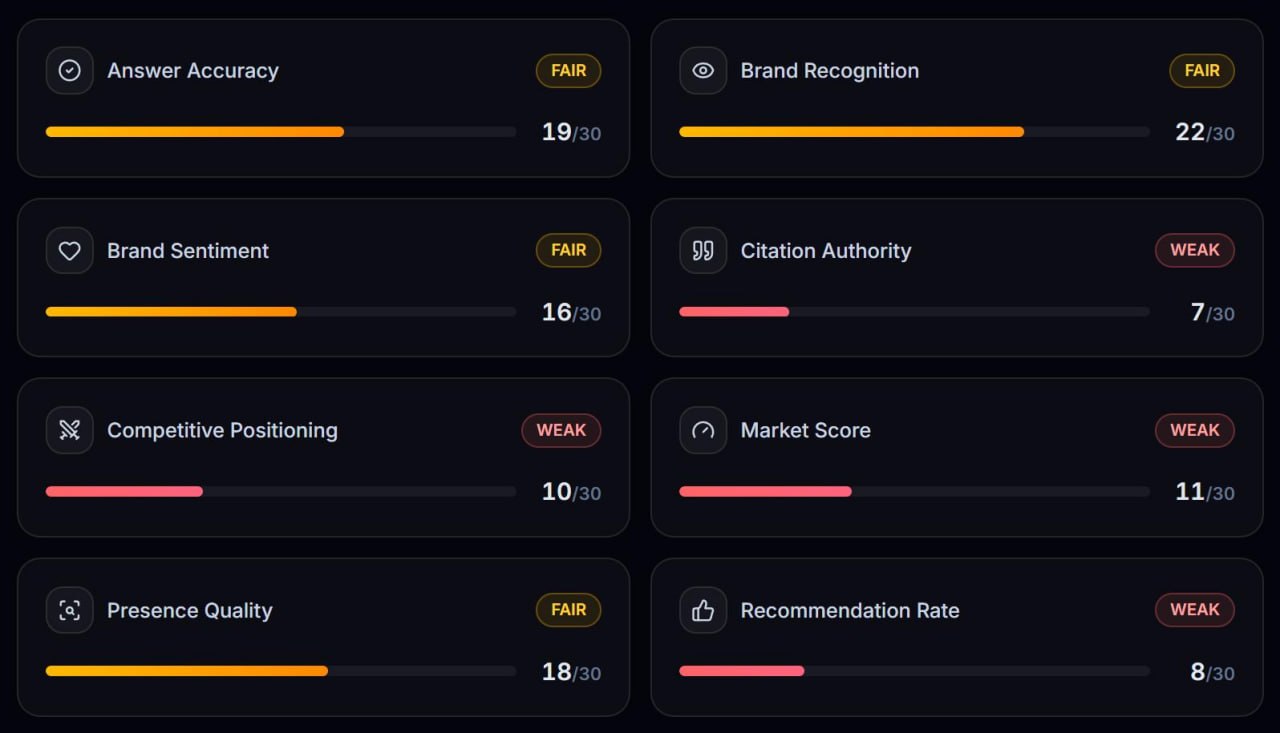
Cigna maintains substantial global visibility as one of the world's largest health services organizations, though its strongest brand recognition concentrates in the United States where it merged with Express Scripts in 2018. Internationally, Cigna operates through Cigna Global Health Benefits, serving multinational employers, expatriates, and government-sponsored programs across 30+ countries, with notable strength in markets like the UK, Spain, and select Asian territories.
Its global reputation is mixed-functionally strong in employer-sponsored international private medical insurance but less consumer-facing than local national health systems or regional insurers. Main competitors include Aetna (CVS Health), UnitedHealthcare Global, Bupa, Allianz Worldwide Care, and AXA Global Healthcare. Cigna's strengths include comprehensive network breadth, digital health integration, and tailored expatriate coverage; concerns center on customer service variability, claims disputes, and premium pricing relative to local alternatives. Public discourse often distinguishes between satisfied corporate clients and frustrated individual policyholders navigating complex exclusions.
For someone in Global seeking healthcare solutions, particularly mobile professionals, expatriates, or multinational employees requiring cross-border continuity, Cigna warrants consideration for network scale and administrative infrastructure. However, those prioritizing localized service responsiveness or cost efficiency may find better value elsewhere. Recommendation is conditional: yes for internationally mobile, employer-supported populations; cautious for individual purchasers in competitive local markets where regional specialists often outperform.
Show the exact prompt sent to Kimi
You are an AI answer engine being audited on how you talk about a brand. Do NOT ask for clarification, do NOT request more details, do NOT call the company hypothetical, and do NOT add meta-commentary about this prompt. Brand: Cigna Website: https://cigna.com Industry: Healthcare Products/Services: Health insurance and managed care services Location / Target market: Global Your reply MUST have exactly two parts, in this order. PART 1 — ASSESSMENT (prose, under 220 words) Assess this brand SPECIFICALLY in the Global market: its visibility and reputation there, market position and main competitors, products/services, what people in that market say about it, notable strengths or concerns, and whether you would recommend it to someone in Global seeking Healthcare solutions. If the brand is global, still weight the assessment toward Global. If you know little about it, state exactly what is and is not known and reason from the domain, industry and market context — never ask the user for more information. PART 2 — METRICS (mandatory, machine-read) Before writing the metrics, silently run this procedure: a) Write 10 realistic buyer-intent questions someone in Global would ask when shopping in the Healthcare category (for example "best Healthcare provider", "Health insurance and managed care services alternatives", "is Cigna any good"). Count how many of those 10 you would answer with Cigna actually named — that number is mentions_out_of_10. b) Estimate how many distinct pages of https://cigna.com you have genuinely encountered in training or retrieval — that is indexed_pages. If you have effectively never seen the domain, use 0. c) List the real competitors you would name in those answers, then work out what share of the total brand-name slots Cigna would occupy (share_of_voice_pct) and its rank within that set. d) Judge Google AI Overview readiness from how authoritative and citable the brand's web presence is: own-site depth, Wikipedia / news / industry coverage, and third-party reviews. Rules for the numbers. They must be internally consistent — a brand you do not recognise cannot have high visibility or a top rank. Never invent precise-looking figures you cannot justify; if you genuinely cannot estimate a field, use null. Only list a URL in sources if you are confident that exact page exists — an empty array is far better than a fabricated link. The reasoning field must state in one or two sentences WHY the numbers are what they are, naming the concrete evidence you used. Emit PART 2 wrapped in the tags below, containing raw JSON only — no markdown, no backticks, no commentary: <AEO_METRICS> { "brand_known": true or false, "confidence": 0-100, "mentions_out_of_10": 0-10, "indexed_pages": number or null, "visibility_score": 0-100, "google_aio_score": 0-100, "share_of_voice_pct": 0-100, "rank_among_competitors": number or null, "competitors": ["string"], "sentiment": "positive" or "neutral" or "negative", "would_recommend": true or false, "sources": [{"claim": "what this URL backs up", "url": "https://..."}], "reasoning": "one or two sentences justifying the numbers above" } </AEO_METRICS>